Project overview
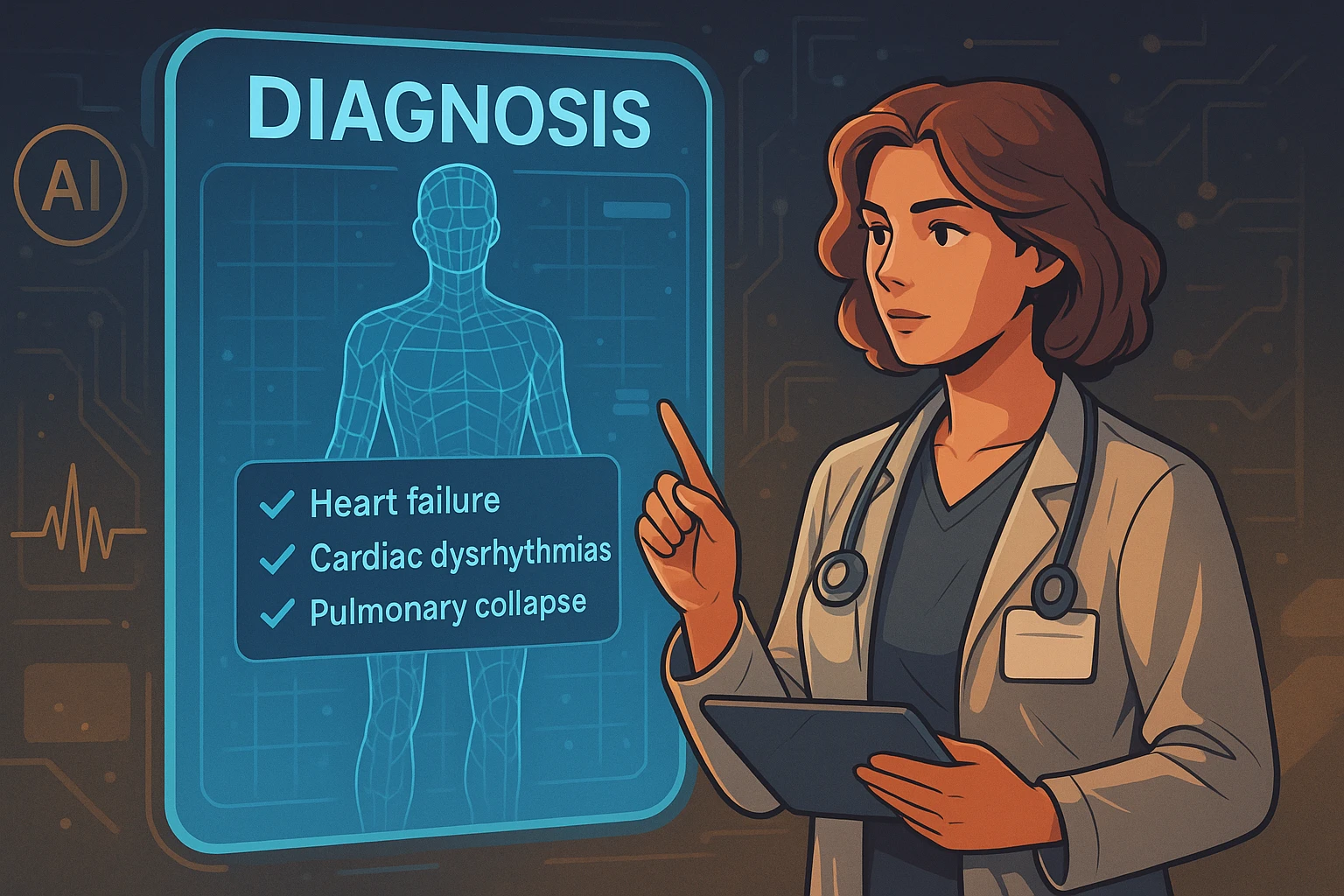
TraumaCorp is a compact, embeddable AI-powered diagnostic assistant built for emergency responders, paramedics, and mobile medical systems. Exposed through a lightweight REST API, it delivers rapid, preliminary triage by analyzing basic patient data and symptoms — helping professionals identify the most likely and dangerous conditions in seconds.
Unlike complex diagnostic engines, TraumaCorp is designed for speed, clarity, and field usability. With a model size under 450 MB, it can run on modest hardware, including edge devices and emergency vehicle systems, making it ideal for environments with limited connectivity or computational resources.
In critical moments where every second matters, TraumaCorp provides AI-assisted clinical prioritization — not as a replacement for medical judgment, but as a high-speed support layer that can highlight red flags and guide first-response action until deeper evaluation is possible.
- Optimized for low-resource environments — can be deployed on edge devices, ambulances, and embedded systems without GPU requirements.
- Accepts structured patient data and symptoms via JSON and returns prioritized diagnostic suggestions in seconds.
- Processes combined input from symptoms, exam results, medication, family history, and lifestyle to produce relevant clinical flags.
- Returns a ranked list of potential diagnoses — emphasizing high-risk or life-threatening conditions to support urgent decision-making.
- Designed to assist paramedics, ER teams, and remote medics in high-pressure environments where every second counts.
- Can be run on Raspberry Pi–class hardware, ARM-based systems, or in the cloud — fully containerizable and portable.
- No persistent storage, no external calls — all inference happens locally, respecting patient data sensitivity in critical environments.
What is AI-based Diagnostics and Why Does it Matter?
AI-based diagnostics is the use of machine learning models to assist in identifying potential medical conditions based on structured patient data — such as symptoms, medical history, vital signs, and physical exam findings. Instead of replacing doctors, these systems act as intelligent support tools, rapidly analyzing complex inputs and surfacing the most probable or dangerous possibilities. Their strength lies in speed, consistency, and the ability to consider thousands of cases and patterns simultaneously — something no human can do in real time.
Modern diagnostic AI tools are trained on large datasets of clinical records, case reports, or expert-annotated examples. Once deployed, they can help in triage, risk stratification, or early warning — especially in fast-paced environments like emergency rooms, ambulances, or field clinics. Used responsibly, AI diagnostics don’t make final decisions — they help medical professionals make better ones, faster.
Project solution
TraumaCorp bridges the gap between raw patient data and time-critical medical decisions by providing a compact, AI-driven triage assistant accessible via a REST API. The solution is built around a custom-trained lightweight model, optimized to run efficiently on low-power hardware — including ARM-based systems and embedded medical devices.
When provided with structured clinical inputs (such as symptoms, vitals, medications, and history), TraumaCorp analyzes the information in real time and returns a prioritized list of possible diagnoses. The model emphasizes life-threatening and high-risk conditions, enabling first responders to act quickly and with greater confidence. This setup empowers medics in the field or emergency departments to gain immediate, context-aware decision support — without needing access to large cloud models or hospital infrastructure.
6M+
Deaths Per Year Due to Late or Missed Diagnosis
34min+
Avg. Wait for Triage in Emergency Rooms
20M+
First Responders Worldwide
12K+
Medical Conditions Covered by the Model
TraumaCorp: What Everyone Asks?
Curious about how deep reconnaissance really goes, what’s legal, and what tools actually matter? Here are the most common — and most revealing — questions about recon, answered with clarity and just the right amount of sarcasm.
Absolutely not. TraumaCorp is an assistive tool — not a replacement for professional medical judgment. It supports decision-making in high-pressure environments by surfacing critical diagnostic possibilities, helping responders act faster and more confidently.
TraumaCorp is trained on validated clinical data and tuned for emergency relevance, not deep diagnostic depth. It’s designed to recognize high-risk patterns quickly — not to provide a full workup. In critical situations, speed and prioritization matter more than perfect precision.
Yes. TraumaCorp runs entirely locally or in isolated environments, with no external calls, no cloud dependency, and no data retention. It’s designed with privacy and operational security in mind — even for sensitive environments.
Thanks to its compact size (-450MB), TraumaCorp can operate on edge devices, ARM-based boards, or standard embedded systems — no GPU or datacenter required. It’s built for real-world field conditions, not just lab demos.
TraumaCorp doesn’t aim for final diagnoses. Instead, it highlights likely and dangerous possibilities like heart failure, pulmonary issues, or cardiac dysrhythmias — enabling faster triage and smarter escalation in the golden minutes of emergency care.